Organizer information

from 3
December
to 3
December
December, 2026
December, 2026
03 Dec | 17:00 Thu
ul. Mikołaja Kopernika 17a , 31-501 Kraków, Kraków
15
Buy Ticket
03 Dec | 17:00 Thu
ul. Mikołaja Kopernika 17a , 31-501 Kraków, Kraków
15
Buy Ticket
"(…)
First of all:
Ask the question about the definition of “inclusion.” What does it actually mean? Who is including whom?
Tip: “inclusion” is not a task to be done.
It is not drudgery.
It is not a favor. Nor philanthropy.
It should not be an “extra” or an afterthought either." (…)
— like Soroka, Human Manifesto: take these words with you, trans. Emil Zaremba (excerpt)
The main goal of the workshop is to equip people working in the theory and practice of dance, as well as in dance and theatre education, with knowledge about creating inclusive and accessible choreography.
The guiding question we will try to answer is: How can we create professional, inclusive choreographies while preserving their artistic and aesthetic qualities?
Participants will learn what inclusive and accessible choreography is (and isn’t), expand their creative toolbox with inclusive movement elements and body-work methods, and gain an understanding of what an accessibility rider is.
The workshop will also be an opportunity to discover the work of dancers with disabilities, the tools they use in their creative process, as well as the barriers they encounter.
The workshop will be practical in nature. Based on the tools explored, participants will prepare short etudes to be presented at the end of the session.
⏱ Hours: 10
👥 Capacity: 12 participants
💸 Cost: 100 PLN / person / 10h
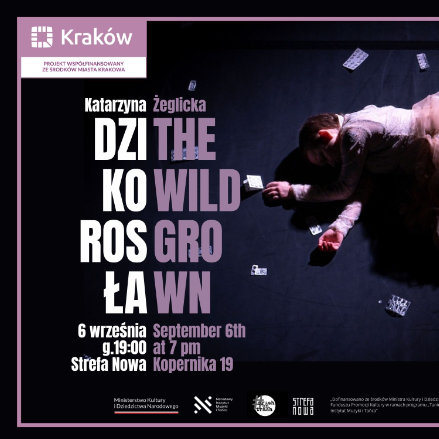
👩🏫 Facilitator: Katarzyna Żeglicka
🤟 Polish Sign Language interpretation (PJM): Jakub Studziński
📝 Registration until October 1 via form: [link]
Katarzyna Żeglicka (she/her, they/their) – queer and crip theatre pedagogue and cultural animator, performer, dancer, choreographer, and burned-out activist; certified trainer of WenDo – self-defense and assertiveness for women and girls.
For over 20 years, she has worked with people experiencing discrimination and violence. In Poland and abroad, she speaks out on the rights of artists with disabilities. She collaborates with cultural institutions, universities, and NGOs. She regularly conducts body-work labs, choreographic workshops, anti-discrimination, empowerment, and resilience workshops.